
Tire Safety · Buying Guide
8 Best Tire Pressure Monitoring Systems (TPMS) of 2026
By Mozammel HussainUpdated October 13, 202614 min read
As an Amazon Associate I earn from qualifying purchases. We may earn a commission if you buy through links on this page, at no extra cost to you. Learn more.
An aftermarket TPMS watches every tire's pressure and temperature while you drive and warns you about slow leaks before they turn into blowouts. We compared eight systems that are available on Amazon right now, covering RVs, travel trailers, cars and pickups, on pressure range, accuracy, how many tires they can watch, and how they're powered.
Key takeaways
- Check the PSI range first. Many RV tires run 80–110 psi, so a 0–87 psi system won't work on them.
- RV and trailer owners: pick a system that monitors 10+ tires and includes a signal repeater or booster.
- Car and SUV drivers: a simple 4-sensor, plug-in kit is usually all you need.
- Use metal valve stems with external cap sensors; rubber stems can flex and leak at speed.
Our Top Picks at a Glance
- Best Overall for RVsTireMinder i10 RV TPMSCheck Price
- Best for Cars, SUVs & PickupsTymate TM7 TPMSCheck Price
- Best Budget Pick for CarsVESAFE Wireless TPMSCheck Price
- Best Solar-Powered SystemTymate TM3 RV TPMSCheck Price
- Best Value Solar KitTymate TM2 RV TPMSCheck Price
TPMS Comparison
Specs come from the manufacturers' Amazon listings, checked in October 2026.
| System | Best for | Sensors included | Max tires | PSI range | Power | Buy |
|---|---|---|---|---|---|---|
| TireMinder i10 RV TPMS | Best overall for RVs | 4 + booster | 40 | 0–199 | 12V plug | View on Amazon |
| Tymate TM7 TPMS | Cars, SUVs, pickups | 4 | 5 | 0–144 | 12V plug | View on Amazon |
| VESAFE Wireless TPMS | Budget, cars | 4 | 4 | 0–87 | 12V plug | View on Amazon |
| Tymate TM3 RV TPMS | Solar, trailers | 4 | 10 | 0–87 | Solar + USB | View on Amazon |
| Tymate TM2 RV TPMS | Value solar | 4 | 10 | 0–87 | Solar + USB | View on Amazon |
| TireMinder Smart TPMS (6 Sensors) | Phone app, big rigs | 6 + booster | 22 | 0–232 | 12V adapter | View on Amazon |
| TST 507 Series RV TPMS | Towing several trailers | 4 + repeater | Tow vehicle + 4 | See listing | Rechargeable | View on Amazon |
| Hieha 7.84" Solar RV TPMS (6 Sensors) | Biggest screen | 6 | 6 | 0–198 | Solar + battery | View on Amazon |
The Best Tire Pressure Monitoring Systems: Reviews
1. TireMinder i10 RV TPMS
Our score: 4.7/5Sold as: Monitor + 4 transmitters + Rhino booster
If you tow or drive a motorhome, the TireMinder i10 is the system we'd buy first. Its 0–199 psi range covers even high-pressure RV and trailer tires, and it can grow from 4 sensors to as many as 40 tires.
- PSI range0–199 psi
- Accuracy±1 psi
- Max tiresUp to 40
- Display3.15" color LCD
The i10 checks every tire roughly every six seconds for slow leaks, rapid leaks, blowouts, low or high pressure and high temperature, and it shows pressure and temperature on a 3.15-inch color screen. The included Rhino signal booster matters on long rigs: weak signals from the back of a trailer are the most common TPMS complaint, and the booster addresses that out of the box. TireMinder is also known for US-based customer support.
What we like
- Huge 0–199 psi range for high-pressure RV tires
- Expands up to 40 tires
- Signal booster included
Watch out for
- Costs more than budget kits
- Screen is smaller than some rivals
- Extra transmitters sold separately
Verdict: Best for motorhome and towing setups that need a wide pressure range and room to expand.
Check Price on Amazon2. Tymate TM7 TPMS
Our score: 4.5/5Sold as: Monitor + 4 external sensors
The TM7 is the easiest way to add tire monitoring to an older car, SUV or pickup that never had TPMS. It plugs into the 12V socket, so there's no battery to charge and no wiring.
- PSI range0–144 psi
- Accuracy±1.5 psi / ±3°F
- Max tiresUp to 5
- PowerCigarette-lighter plug
Its 0–144 psi range is wider than most car kits, which makes it a good fit for light trucks and vans that run higher pressures. The color LCD has an adjustable backlight, and the plug includes dual USB ports so you don't lose a charging outlet. Tymate rates accuracy at ±1.5 psi, slightly looser than the TireMinder, but more than enough to catch a slow leak. Like all cap-style sensors, it works best on metal valve stems.
What we like
- Plug-and-play 12V power with dual USB
- Wide 0–144 psi range for a car kit
- Clear color display
Watch out for
- Only monitors up to 5 tires
- Takes up the 12V socket
- ±1.5 psi accuracy, not ±1
Verdict: Best for everyday drivers who want reliable, no-fuss monitoring on a car, SUV or pickup.
Check Price on Amazon3. VESAFE Wireless TPMS
Our score: 4.3/5Sold as: Monitor + 4 external cap sensors
If you just want a warning light for your four car tires without spending much, VESAFE's compact kit does the basics well.
- PSI range0–87 psi
- Sensor weight9 g each
- Sensor batteryCR1632, up to 2 years
- Warranty18 months
The monitor plugs into the cigarette lighter and shows all four tires at once, with a visual and audible alarm when something's wrong. The 9-gram cap sensors are waterproof and anti-theft, and their replaceable CR1632 batteries last up to two years. VESAFE is clear that this kit is for 4-tire passenger vehicles only, not motorhomes, campers or trailers, and its 0–87 psi range reflects that.
What we like
- Low price for a full 4-sensor kit
- Tiny, lightweight anti-theft sensors
- Up to 2-year sensor battery life
Watch out for
- Not for RVs, campers or trailers
- 0–87 psi range only
- Basic monochrome-style display
Verdict: Best for budget-minded car owners who want simple, dependable leak alerts.
Check Price on Amazon4. Tymate TM3 RV TPMS
Our score: 4.4/5Sold as: Monitor + 4 external sensors
The TM3 sits on the dash and charges itself from sunlight, so you never have to think about plugging it in. It's a strong fit for travel trailers and fifth wheels with tires under 87 psi.
- PSI range0–87 psi
- Max tiresUp to 10
- PowerSolar + USB
- Sensor lifeUp to 2 years
Tymate gives it five alarm types (high and low pressure, high temperature, rapid leak and low sensor battery), an automatic backlight, and a sleep-and-wake mode that saves power when you park. You can add sensors to watch up to 10 tires and swap tire positions in the menu after a rotation. The limit is pressure: at 0–87 psi it's not suitable for many motorhome and heavy-duty trailer tires, so check your sidewall first.
What we like
- Solar charging with USB backup
- Monitors up to 10 tires
- Easy tire-position swap after rotation
Watch out for
- 0–87 psi is too low for many RV tires
- Solar needs regular sun
- Extra sensors cost more
Verdict: Best for travel-trailer owners who want a cable-free, self-charging monitor.
Check Price on Amazon5. Tymate TM2 RV TPMS
Our score: 4.2/5Sold as: Monitor + 4 external sensors
The TM2 is Tymate's simpler solar monitor and usually the cheaper of the two. It does the same core job as the TM3 with fewer extras.
- PSI range0–87 psi
- Max tiresUp to 10
- PowerSolar + USB
- Sensor batteryCR1632, about 6 months
You still get solar and USB charging, user-set alarm limits, an auto-adjusting backlight that changes color when there's a problem, and a power-saving mode. The trade-off is sensor battery life: Tymate quotes about six months on a CR1632, compared with up to two years on the TM3, so budget for replacement coin cells. Like the TM3, its 0–87 psi range rules out high-pressure RV tires.
What we like
- Low cost for a solar TPMS
- Up to 10 tires
- Color-changing alert display
Watch out for
- Sensor batteries last about 6 months
- 0–87 psi range
- Fewer features than the TM3
Verdict: Best for occasional campers who want solar convenience at a lower price.
Check Price on Amazon6. TireMinder Smart TPMS (6 Sensors)
Our score: 4.4/5Sold as: Bluetooth adapter + 6 transmitters + booster
TireMinder Smart replaces the dash monitor with an app on your phone or tablet. For big rigs it has the widest range in this guide: 0–232 psi and up to 22 tires.
- PSI range0–232 psi
- Max tiresUp to 22
- DisplayPhone app (iOS/Android)
- Sensors included6
A small Bluetooth adapter receives the sensor data and passes it to the app, which shows pressure and temperature together and alerts you to slow leaks, rapid leaks, high temperature and blowouts. Six transmitters are included, so it's ready for a dually truck or a motorhome plus toad out of the box, and the Rhino booster strengthens the signal from the back of long trailers. The catch: your phone must stay connected and charged while you drive.
What we like
- Widest range: 0–232 psi
- 6 sensors included, up to 22 tires
- Large, customizable phone display
Watch out for
- Relies on your phone staying connected
- Needs a phone mount while driving
- Pricier starter kit
Verdict: Best for big motorhomes and dually setups that want app-based monitoring.
Check Price on Amazon7. TST 507 Series RV TPMS
Our score: 4.3/5Sold as: Color monitor + 4 cap sensors + repeater
Truck Systems Technology (TST) designed the 507 for RVers who tow. It can track your tow vehicle plus up to four towable vehicles, and it ships with a repeater.
- Display3.5" color, rechargeable
- TowablesTow vehicle + up to 4
- Sensor batteryCR2032, user-replaceable
- Warranty3 years
The 3.5-inch color monitor runs on a rechargeable battery, so it can sit on the dash without a cable, and it locks onto the problem tire when an alarm goes off. Sensors use standard CR2032 batteries you can replace yourself, and TST backs the kit with a three-year warranty and US-based support. During our October 2026 check it was offered mainly by third-party sellers on Amazon, so compare sellers before you buy.
What we like
- Handles a tow vehicle plus 4 towables
- Repeater included
- 3-year warranty and US support
Watch out for
- Mostly third-party sellers on Amazon
- Smaller screen than Hieha
- Premium price
Verdict: Best for full-time RVers who tow a car, boat or second trailer.
Check Price on Amazon8. Hieha 7.84" Solar RV TPMS (6 Sensors)
Our score: 4.1/5Sold as: 7.84" monitor + 6 sensors
With a 7.84-inch color screen, the Hieha is by far the easiest monitor in this guide to read at a glance, which is handy on a large motorhome dashboard.
- PSI range0–198 psi
- Accuracy±1 psi
- RangeUp to 130 ft
- PowerSolar + 5000 mAh battery
It includes six sensors, reads 0–198 psi to ±1 psi, and Hieha claims a 130-foot transmitting range without a separate repeater. A solar panel and a 5,000 mAh battery keep it running, and it wakes on vibration and sleeps when you park. It has fewer independent reviews than TireMinder or Tymate, so treat it as a strong value option rather than a proven long-term pick.
What we like
- Huge 7.84" color screen
- 6 sensors and 0–198 psi range
- Long range without a repeater
Watch out for
- Bulky on smaller dashboards
- Smaller brand, fewer long-term reports
- Solar can struggle in winter
Verdict: Best for drivers who want the largest, clearest display on a big RV.
Check Price on AmazonHow to Choose a Tire Pressure Monitoring System
1. Make sure the PSI range covers your tires
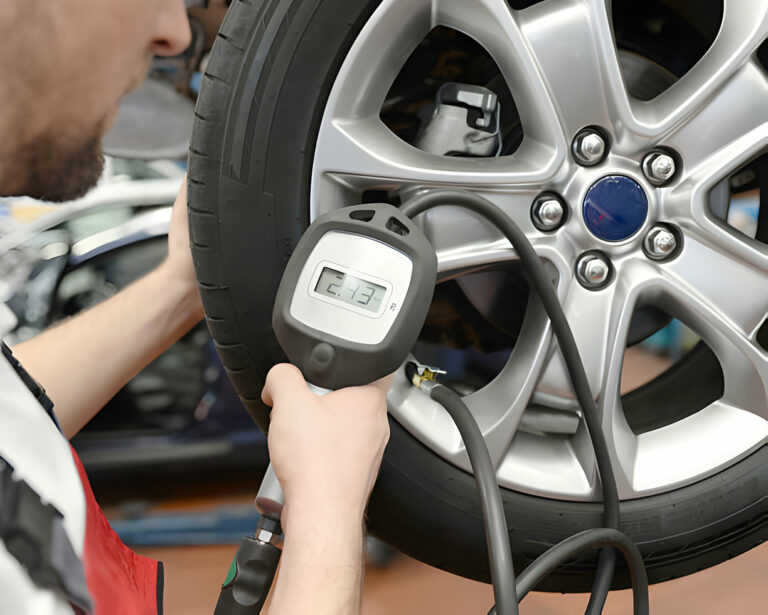
Look at the maximum cold pressure printed on your tire sidewall, then choose a system whose range is comfortably above it. Car tires usually run 30–40 psi, but many RV, motorhome and heavy trailer tires run 80–110 psi. A 0–87 psi kit is fine for cars and lighter trailers, but you'll need a 0–144 psi or 0–199 psi system for most motorhomes.
2. Count the tires you need to watch
A car needs four sensors. A dually pickup needs six, and a motorhome towing a car can easily need ten or more. Systems like the TireMinder i10 and Smart, Tymate TM2/TM3 and TST 507 let you add sensors later.
3. Plan for signal range on long rigs
Sensors on the back of a trailer can be 40+ feet from the monitor. Look for a system with a repeater or signal booster (TireMinder and TST include one) if your setup is long.
4. Choose how you want it powered
Plug-in monitors (Tymate TM7, VESAFE) never need charging but use your 12V socket. Solar monitors (Tymate TM2/TM3, Hieha) keep the dash tidy but depend on sunlight. App-based systems (TireMinder Smart) rely on your phone.
5. External cap vs. internal sensors
Every kit in this guide uses external sensors that screw onto the valve stem, so you can install them yourself in minutes. Internal sensors mount inside the tire and need a tire shop, but they're protected from theft and damage. If you use cap sensors, switch to metal valve stems: the extra weight can make rubber stems flex and leak at highway speed.
Installing and Maintaining Your TPMS
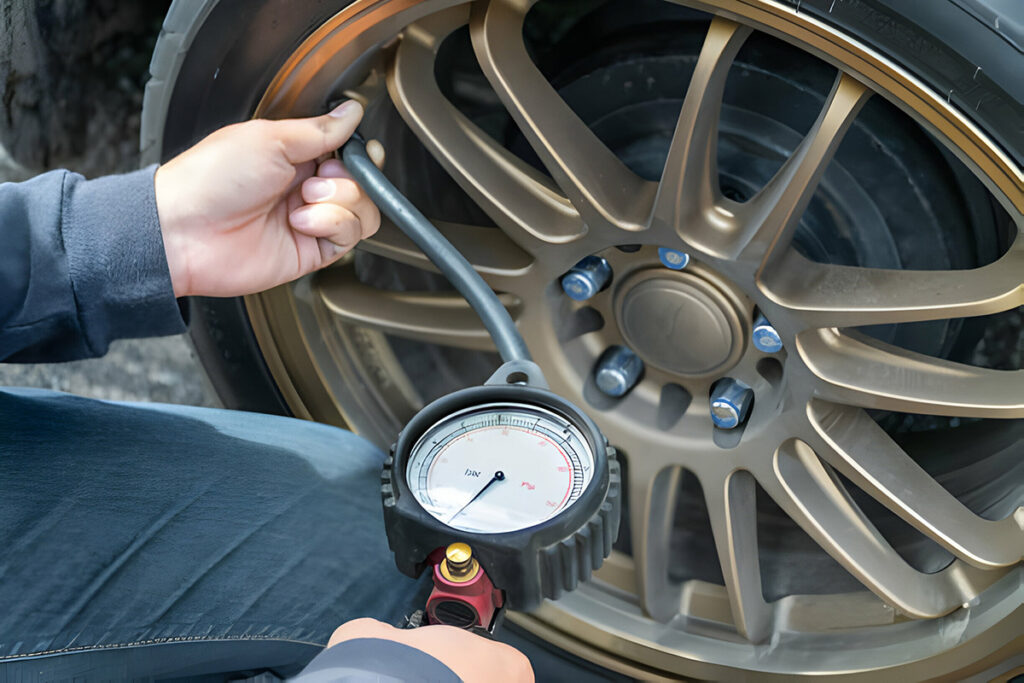
- Set each tire to the correct cold pressureUse a quality gauge before installing sensors, since the system learns from the first readings.
- Pair sensors in the right positionsMost monitors label sensors (LF, RF, LR, RR). Fit each one to its matching wheel, or pair them in the menu.
- Set your alarm limitsA common starting point is a low-pressure alarm about 10–15% below your target pressure and a high-temperature alarm around 158°F (70°C), then follow your manual.
- Check it against a gaugeCompare readings with a manual gauge every few weeks, and replace sensor batteries when the low-battery alert appears.
For a full walkthrough, see our guide to installing and calibrating a TPMS. If readings look wrong, our TPMS troubleshooting guide covers the usual causes, and how temperature affects tire pressure explains why readings drop on cold mornings.
How We Chose These Systems
We did not road-test these systems ourselves. We compared manufacturer specifications (pressure range, accuracy, tire capacity, signal range, power source and battery life), the features that matter most for different vehicles, and recurring themes in owner feedback such as signal dropouts and battery life. We checked every product's Amazon listing in October 2026 and replaced discontinued or unavailable models. Scores weigh pressure range and accuracy (35%), reliability and signal (25%), ease of use and display (20%) and value and expandability (20%).
Frequently Asked Questions
Do I need an aftermarket TPMS if my car already has one?
Most cars built since 2008 have a factory TPMS that warns when a tire is significantly low. An aftermarket system adds live pressure and temperature readings for every tire, and it's essential for trailers, RVs and older vehicles that have no factory system.
Are external TPMS sensors safe at highway speed?
Yes, when they're installed correctly. Use metal valve stems, tighten sensors by hand as the manual describes, and check them after the first drive. Most kits include anti-theft locking nuts.
How long do TPMS sensor batteries last?
It depends on the sensor and how much you drive. Manufacturers quote from about six months (Tymate TM2) to around two years (VESAFE, Tymate TM3). Most cap sensors use replaceable CR1632 or CR2032 coin cells.
Why does my TPMS show lower pressure on cold mornings?
Tire pressure drops about 1 psi for every 10°F fall in temperature. Check and set pressure when tires are cold, and expect readings to rise a few psi as tires warm up while driving.
Will a car TPMS work on my RV or trailer?
Only if its pressure range and tire capacity are high enough. Many car kits top out at 87 psi and four tires, which isn't enough for most RVs. Choose an RV system with a higher psi range and a repeater for long rigs.
The Bottom Line
For RVs and towing, the TireMinder i10 is our top pick thanks to its 0–199 psi range and expandability. For cars, SUVs and pickups, the plug-in Tymate TM7 is the easiest upgrade, and the VESAFE kit covers the basics for less. If you'd rather use your phone, the TireMinder Smart handles the biggest rigs.
Related guides
Mozammel writes maintenance guides and product research for My Auto Fix, focusing on tires and DIY car and powersports care. About our editorial process.