

Visibility & Safety · DIY Guide
Streaking Wiper Blades? Why It Happens and How to Fix It in 5 Minutes
By Mozammel HussainUpdated October 13, 20267 min read
As an Amazon Associate I earn from qualifying purchases. We may earn a commission if you buy through links on this page, at no extra cost to you. Learn more.
Streaks, smears and chattering wipers aren't just annoying; they make it harder to see at night and in heavy rain. Most of the time the fix is simple: clean the glass and blades properly, or swap in a new pair of blades, which takes less than five minutes and no tools.
Key takeaways
- Most streaking comes from dirty or worn rubber, or a film of wax and road grime on the glass.
- Clean the blade edge with a cloth and washer fluid before replacing anything.
- Replace blades about every 6–12 months, or sooner if they're cracked or skipping.
- Check the size for each side; driver and passenger blades are often different lengths.
Why Wiper Blades Streak
- Worn or hardened rubber. Sun, heat and cold make the rubber edge crack or round off, so it can't wipe cleanly.
- Dirt on the blade. Sand and grit stuck to the edge leave lines across the glass.
- Film on the windshield. Car-wash wax, tree sap and road grime create a greasy layer that smears instead of clearing.
- Bent arm or frame. If the arm doesn't press evenly, part of the blade lifts and leaves an unwiped band.
- Plain water in the reservoir. Washer fluid contains cleaners that water lacks, and water can freeze in winter.
Quick Fixes to Try First
- Clean the glass thoroughly. Wash the windshield with glass cleaner, then wipe it with a little rubbing alcohol on a microfiber cloth to strip wax and road film.
- Wipe the blade edges. Lift each wiper and run a damp cloth with washer fluid along the rubber until no more dirt comes off.
- Use real washer fluid. Fill the reservoir with a washer fluid suited to the season, such as a de-icing formula in winter.
- Check the arm. Make sure the blade sits flat along its whole length. If one end lifts, the arm may be bent or its spring weak.
If the streaks return within a day or two, or the rubber is cracked, torn or stiff, it's time for new blades.
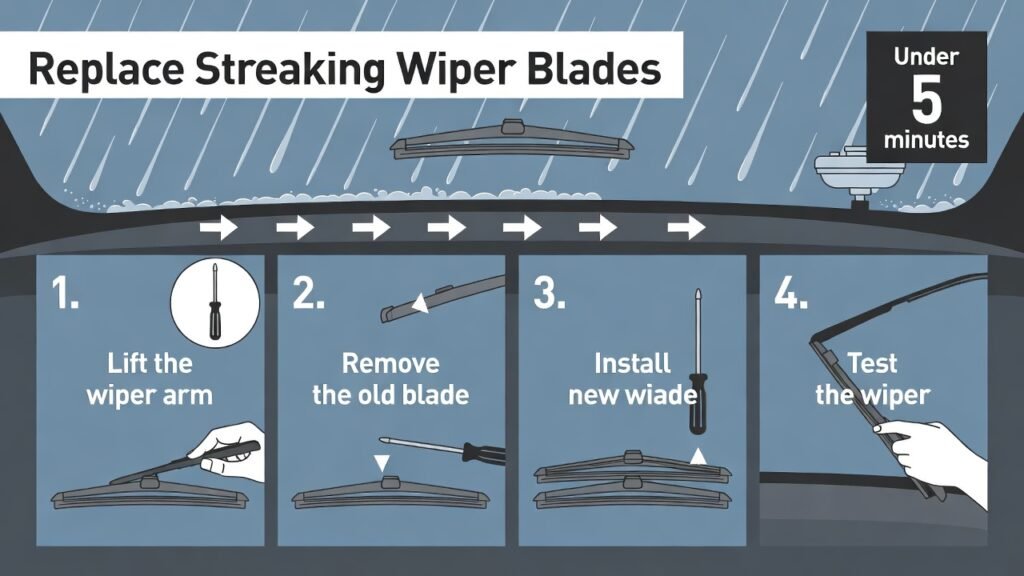
How to Replace Wiper Blades in Under 5 Minutes
- Find the right sizes. Check your owner's manual or use a fit guide. Driver and passenger sides are often different lengths, and some cars use a rear blade too.
- Lift the arm and protect the glass. Raise the wiper arm away from the windshield and lay a folded towel on the glass in case the bare arm snaps back.
- Release the old blade. Most cars use a J-hook: press the small tab, slide the blade down toward the pivot and lift it off the hook.
- Fit the new blade. Slide the new blade's adapter onto the hook until it clicks. Pull gently to make sure it's locked.
- Lower and test. Lower the arm carefully, remove the towel and run the wipers with washer fluid to check for a clean, quiet sweep.
Beam vs. Conventional Blades
Conventional (frame) blades use a metal frame with several pressure points. They're the cheapest option but can let snow and ice build up in the frame. Beam blades use a single curved spring steel or composite spine that presses evenly along the whole blade. They usually cost more but tend to wipe more evenly at speed and handle winter better. Hybrid blades combine a frame with a cover for aerodynamics.
Wiper Blades We Recommend
These widely available beam blades fit most cars. Always confirm the size for your vehicle using the listing's fit selector.
- Best valueRain-X Repellency Wiper BladeBeam-style blade with a water-repellent coating; use Amazon's size selector to fit your car.Check Price
- Best premiumBosch ICON Beam Wiper Blades (set)Premium beam blades with a durable rubber blend that resists streaking in heat and cold.Check Price
Frequently Asked Questions
Why are my new wiper blades streaking?
New blades usually streak because of film on the glass, such as wax or road grime. Clean the windshield with glass cleaner and a little rubbing alcohol. Also check that the blade is the correct size and properly clicked onto the arm.
How often should I replace wiper blades?
Most drivers should replace them every 6 to 12 months. Replace them sooner if the rubber is cracked or torn, or if they streak, skip or chatter after cleaning.
Can I fix streaking wipers without replacing them?
Often, yes. Cleaning the glass and wiping the rubber edge with washer fluid removes most streaks. If the rubber is hardened or damaged, cleaning won't help and you'll need new blades.
Why do my wipers chatter?
Chattering usually comes from a dirty or waxed windshield, hardened rubber, or a wiper arm that's twisted so the blade doesn't meet the glass at the right angle.
The Bottom Line
Clean first, then replace. A thorough clean of the glass and blades fixes many streaks, and if it doesn't, new blades are a cheap five-minute job. For a full walkthrough of different blade types, see our guide to replacing worn-out windshield wipers.
Related guides
Mozammel writes maintenance guides and product research for My Auto Fix, focusing on tires and DIY car and powersports care. About our editorial process.