
Repair Guide
Car Pulls to One Side? 7 Causes and How to Fix Each One
As an Amazon Associate I earn from qualifying purchases. We may earn a commission if you buy through links on this page, at no extra cost to you. Learn more.
If your car pulls to one side, you’re constantly correcting the steering just to drive straight, which is tiring and wears your tires unevenly. The cause can be as simple as one low tire or as hidden as a tire with an internal belt shift. The key is noticing when the pull happens: all the time, only when braking, or only on certain roads. This guide shows quick tests to narrow down the cause and explains which fixes are DIY and which need a shop.
Quick answer
- First check tire pressures; one low tire is the most common cause.
- A pull only when braking usually means a sticking caliper or brake issue.
- A pull that changes when you swap front tires is a tire problem (“radial pull”).
- A steady pull with even tires needs a wheel alignment check.
In this guide
For more official guidance, see NHTSA’s tire safety guide.
When Does It Pull?
| When it pulls | Most likely cause |
|---|---|
| All the time, same direction | Tire pressure, tire pull or alignment |
| Only when braking | Sticking caliper, collapsed brake hose, contaminated pads |
| Only when accelerating | Torque steer (FWD) or worn engine mounts |
| Changes with the road | Road crown or ruts; may be normal |
| After hitting a pothole | Alignment or bent suspension part |
| Steering wheel off-center but drives straight | Toe alignment needs adjusting |
The 7 Most Common Causes
1. Uneven tire pressure
A tire with lower pressure has more rolling resistance and a slightly smaller rolling diameter, pulling the car toward that side. Check all four tires cold with an accurate gauge such as the AstroAI digital tire pressure gauge, and set them to the pressure on the door-jamb placard.
2. Road crown
Most roads slope slightly toward the edges to drain water, so many cars drift gently right in right-hand-traffic countries. Test on a flat, empty parking lot before blaming the car.
3. Tire “radial pull”
A tire with an internal belt that’s slightly off-center can pull even with perfect alignment. The test: swap the two front tires side to side. If the pull switches direction, a tire is the cause. If it stays the same, look at alignment or brakes.
4. Wheel alignment
Hitting potholes or curbs, or worn parts, can knock camber, caster or toe out of spec. Signs include uneven tire wear and a steering wheel that isn’t centered. An alignment shop measures and adjusts these angles. Our tire alignment guide explains the basics.
5. Sticking brake caliper
If the car pulls when braking, or a wheel is much hotter than the others after a drive, a caliper may be sticking. Seized slide pins, a stuck piston or a collapsed brake hose can cause it.
6. Worn suspension or steering parts
Worn control arm bushings, ball joints or tie rod ends let the wheel move under load, causing wander or pull, especially when braking or going over bumps.
7. Mismatched tires
Different tire brands, tread patterns or wear levels left and right can cause a pull. Replace tires in axle pairs at minimum, and measure tread with a tread depth gauge.
The Tricky Test: Find a Dragging Brake
After a 15–20 minute drive with normal braking, park safely and carefully hold your hand near (not on) each wheel’s face, or use an infrared thermometer on each brake rotor. A wheel that’s noticeably hotter than the others points to a dragging caliper on that side. You may also see heavier brake dust or smell hot brakes. Have it repaired promptly; a dragging brake can overheat and fail.
Hot brakes burn. Don’t touch rotors or calipers after driving; use a thermometer or feel the air near the wheel.
DIY or Shop?
- DIY: tire pressure, swapping front tires to test, inspecting tire wear, cleaning and lubricating caliper slide pins (if experienced).
- Shop: wheel alignment, replacing suspension or steering parts, diagnosing torque steer and replacing calipers or hoses if you’re not comfortable with brakes.
How to Prevent Pulling
- Check tire pressure monthly and before long trips.
- Rotate tires on schedule; see why tire rotation matters.
- Get an alignment after hitting a big pothole or replacing suspension parts.
- Inspect tires for bulges and uneven wear.
- Service brakes and caliper slide pins during pad changes.
Steering wheel shaking too? See our guide to a steering wheel that shakes when braking.
The Bottom Line
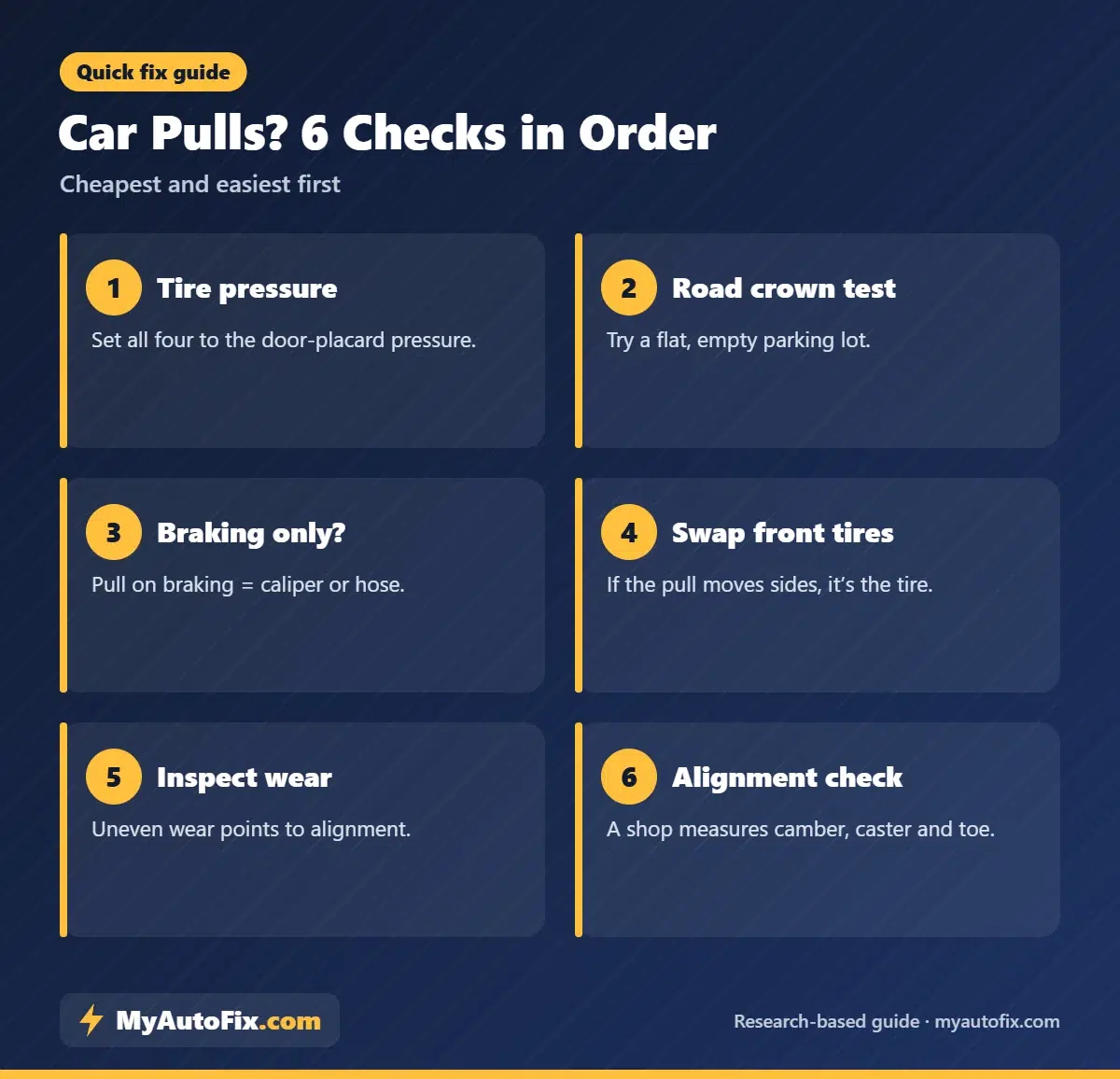
If your car pulls to one side, work from the cheapest checks to the most involved: tire pressures, a flat-road test, swapping the front tires, checking for a hot brake and then an alignment. Most of the time, a car that pulls to one side has a tire or alignment issue that’s quick to fix once you know where to look.
Frequently Asked Questions
Why does my car pull to the right?
Often road crown, low tire pressure on the right side, a tire with radial pull, or alignment. Test on a flat road and check pressures first.
Can a bad tire make a car pull?
Yes. A tire with an internal belt shift can pull even with perfect alignment. Swapping front tires will reveal it.
Why does my car pull when I brake?
Usually a sticking caliper, a collapsed brake hose or contaminated pads on one side. Have the brakes inspected.
How much does an alignment cost?
Costs vary by shop and vehicle; four-wheel alignments cost more than front-only. Many shops include a printout of before-and-after measurements.
Is it dangerous to drive a car that pulls?
A mild pull isn’t an emergency, but it wears tires and can indicate brake or suspension problems. Get it checked soon.
More Repair Guides
Steering Wheel Shakes When Braking? Causes, Fixes and How to Stop It Coming Back
Steering wheel shakes when braking? Learn why rotors develop uneven thickness, how lug nut torque and pad deposits cause it, and how…

Car Cranks But Won’t Start in the Cold? 8 Causes and Fixes
Car cranks but won't start in the cold? Find out whether it’s fuel, spark, a flooded engine or a sensor, with quick…
Car Battery Dies in Cold Weather? Why It Happens and How to Stop It
Car battery dies in cold weather? Why cold weakens batteries, how to test yours in five minutes, how to jump-start safely, and…