
Repair Guide
Steering Wheel Shakes When Braking? Causes, Fixes and How to Stop It Coming Back
As an Amazon Associate I earn from qualifying purchases. We may earn a commission if you buy through links on this page, at no extra cost to you. Learn more.
If your steering wheel shakes when braking, especially from highway speed, the most likely culprit is the front brake rotors. Most people call it “warped rotors,” but true warping is rare. What usually happens is uneven rotor thickness or uneven pad material deposits, which make the brake pads grab and release as the rotor turns. That pulse travels up the steering column as a shake and through the pedal as a pulsation.
Quick answer
- Shaking while braking usually means uneven rotor thickness or pad deposits, not true warping.
- Shaking at speed without braking points to wheel balance or tires instead.
- Uneven lug nut torque is a common hidden cause after tire service.
- Fix with new or resurfaced rotors, correct torque and proper pad bedding.
In this guide
For more official guidance, see FuelEconomy.gov’s maintenance tips.
This guide explains how to confirm the cause, what the repair involves, and the often-overlooked steps that stop the shake coming back a few thousand miles later.
Why the Steering Wheel Shakes When Braking
When you brake, the pads clamp the spinning rotor. If the rotor’s thickness varies even by a few thousandths of an inch around its circumference, or patches of pad material have built up unevenly on its surface, the clamping force rises and falls once per revolution. At highway speed that’s many pulses per second, which you feel as vibration in the steering wheel and a pulsing brake pedal.
| Symptom | Likely cause |
|---|---|
| Steering shakes only when braking | Front rotor thickness variation or deposits |
| Seat or whole car shakes when braking | Rear rotors or drums |
| Shakes at highway speed, braking or not | Wheel balance, tire damage, bent wheel |
| Shake plus pulling to one side | Sticking caliper or uneven pad wear |
| Clunk or shimmy over bumps too | Worn suspension or steering parts |
| Started right after tire service | Uneven lug nut torque |
The Most Common Causes
1. Rotor thickness variation
Small runout (wobble) from a dirty hub, a rotor that isn’t seated flat, or uneven lug nut torque causes the pads to lightly brush one spot on every revolution. Over thousands of miles, that wears the rotor unevenly. Eventually you feel the difference in thickness as a shake.
2. Uneven pad deposits
Holding the brakes hard while stopped after heavy braking, such as at the bottom of a hill, can imprint pad material onto hot rotors. Those deposits grab more than the clean surface and cause vibration.
3. Uneven lug nut torque
Impact guns at tire shops often over-tighten lug nuts unevenly. That can distort the rotor hat and hub, creating runout. Always torque lug nuts in a star pattern with a torque wrench, such as the EPAuto 1/2-inch torque wrench.
4. Sticking calipers or slide pins
A caliper that doesn’t release fully keeps the pad dragging, overheating the rotor and causing uneven wear. Look for one wheel that’s much hotter after a drive, or brake dust heavier on one side.
5. Worn suspension or steering parts
Worn control arm bushings or tie rod ends don’t cause rotor problems, but they amplify any vibration. If the shake is severe for a small pulse, check the front end.
How to Fix It
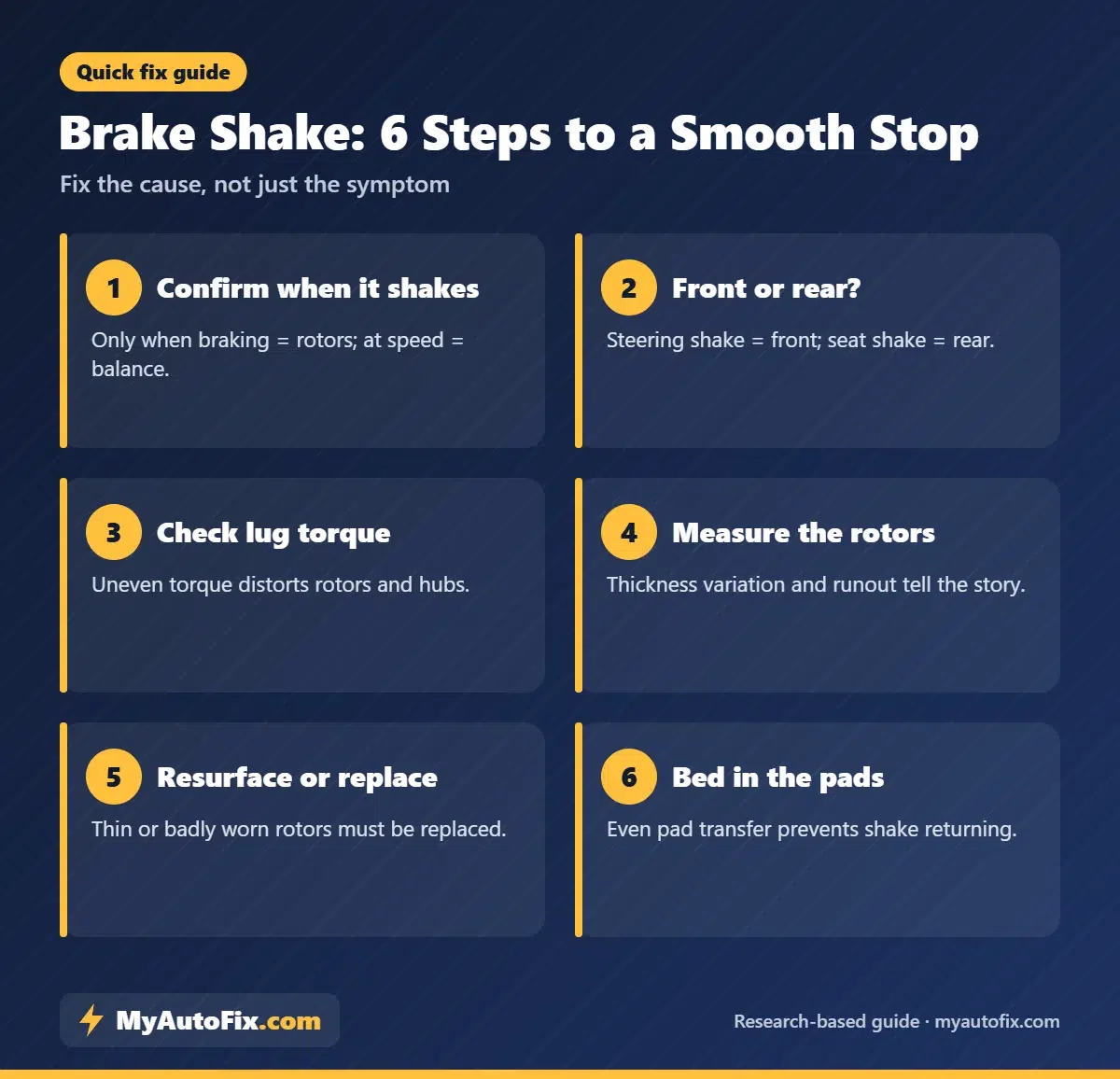
- Lift and support the car safely. Use a floor jack and jack stands; remove the front wheels.
- Inspect pads and rotors. Look for uneven pad wear, glazing, scoring or dark patches on the rotor.
- Measure rotor thickness. Compare with the minimum thickness stamped on the rotor. Below minimum means replacement.
- Decide: resurface or replace. Rotors above minimum with enough material can be machined; many modern thin rotors are better replaced.
- Clean the hub face. Wire-brush rust from the hub so the new rotor sits perfectly flat; this prevents runout.
- Service the calipers. Clean and lubricate slide pins with the correct grease and check pistons retract.
- Fit new pads if needed. Old pads with deposits can transfer them to new rotors.
- Torque correctly. Refit wheels and torque lug nuts to spec in a star pattern.
- Bed in the pads. Follow the pad maker’s bedding procedure to lay an even transfer layer.
The Tricky Bit: Bedding In and Avoiding Imprints
Most comebacks happen because the new pads and rotors were never bedded in. A typical procedure is several moderate stops from about 35 mph to 5 mph, then a few firmer stops from about 45 mph, without coming to a complete stop or holding the brake. Then drive gently for a few minutes to cool the brakes. Afterwards, avoid sitting with your foot hard on the brake right after heavy braking; use the parking brake or ease off slightly when stopped.
Safety: brakes are safety-critical. If you’re not confident, have the work done by a professional. Severe vibration, grinding or a soft pedal need immediate attention.
Electric Cars and Brake Shake
EVs use regenerative braking so much that their friction brakes see little use, which can lead to rust and uneven surfaces on rotors, especially in wet or salty climates. Periodic firm stops help keep rotors clean. See our guide to EV brake rotor rust.
The Bottom Line
When the steering wheel shakes when braking, the fix is usually new or resurfaced front rotors, clean hubs, serviced calipers, correctly torqued lug nuts and properly bedded pads. Skipping the “boring” steps is why the shake often returns. If the steering wheel shakes when braking and also at steady highway speeds, have your wheel balance and tires checked too.
Frequently Asked Questions
Why does my steering wheel shake when I brake?
Usually uneven front rotor thickness or pad deposits, which make the pads grab and release as the rotor turns.
Are warped rotors real?
True warping is rare. Most “warped rotor” symptoms come from thickness variation and uneven pad deposits.
Can I just replace the pads?
Not usually. If rotors have thickness variation, new pads won’t fix the shake. Resurface or replace the rotors too.
Is it safe to drive with brake shake?
Mild shake is a warning sign, not an emergency, but braking performance can suffer. Get it inspected soon.
Can bad lug nut torque cause brake vibration?
Yes. Uneven or excessive torque can distort rotors and hubs, causing runout and eventually vibration.
More Repair Guides

Car Cranks But Won’t Start in the Cold? 8 Causes and Fixes
Car cranks but won't start in the cold? Find out whether it’s fuel, spark, a flooded engine or a sensor, with quick…
Car Battery Dies in Cold Weather? Why It Happens and How to Stop It
Car battery dies in cold weather? Why cold weakens batteries, how to test yours in five minutes, how to jump-start safely, and…

Windshield Fogging Up Inside? How to Clear It Fast and Stop It Coming Back
Windshield fogging up inside? The fastest way to defog with A/C and fresh air, why recirculation makes it worse, and how to…