
Repair Guide
Frozen Car Door Won’t Open? 8 Safe Ways to Get In (and Stop It Happening Again)
As an Amazon Associate I earn from qualifying purchases. We may earn a commission if you buy through links on this page, at no extra cost to you. Learn more.
A frozen car door won’t open for a simple reason. When freezing rain or melting snow refreezes overnight, water can glue the rubber door seals to the body, freeze the lock cylinder or jam the handle mechanism. Pulling harder is how people tear seals, snap handles and crack paint. The good news is that most frozen doors open in a few minutes with the right technique. This guide covers safe ways to break the ice, what to do when the lock or handle itself is frozen, special tips for electric cars with flush door handles, and the simple prevention steps that stop it happening again.
Quick answer
- Push before you pull: leaning firmly on the door cracks ice on the seal.
- Start the car remotely or try another door, then let the heater work from inside.
- Use de-icer spray on frozen locks and handles, never boiling water.
- Prevent it by treating seals with silicone spray before a freeze.
In this guide
For more official guidance, see NHTSA’s winter driving tips.
Why Car Doors Freeze Shut
Doors usually freeze for one of three reasons: water on the rubber weatherstrip freezes and bonds the seal to the door frame; water gets into the lock cylinder or latch and freezes the mechanism; or ice forms around an exterior handle so it can’t move. Freezing rain, washing the car in cold weather, and snow melting on the roof then refreezing are the usual triggers.
Safe Ways to Open a Frozen Car Door
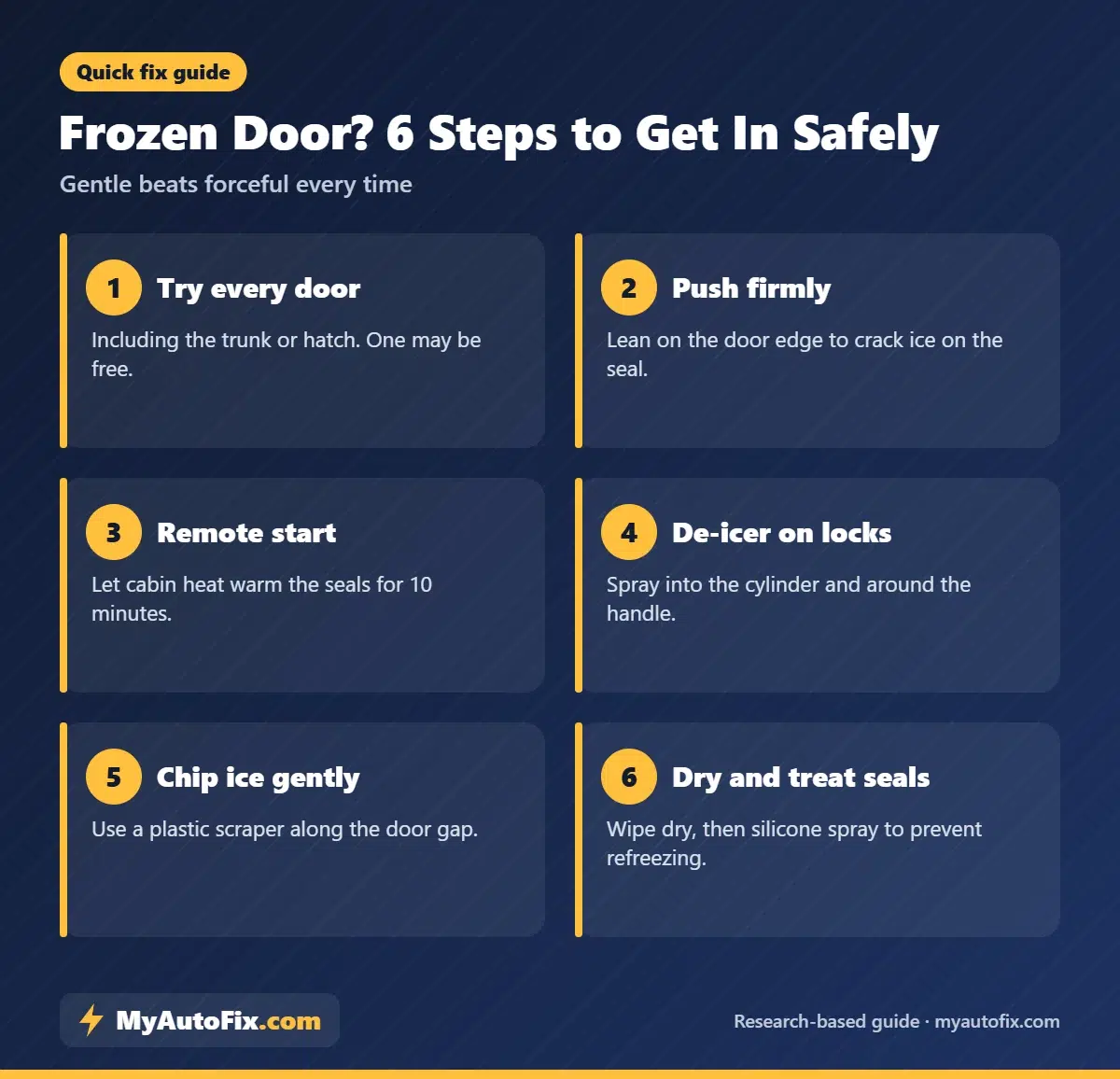
- Try all the doors and the trunk. One door on the sunny or sheltered side may be free. Once inside, start the car and let the heat work.
- Push, then pull. Place your palm near the edge of the door and push firmly a few times. This breaks the ice bond on the seal so the door can then open.
- Use remote start or the app. If your car supports remote start or preconditioning, run the heater and defrosters for 10–15 minutes. Warmth from inside loosens the seals.
- Clear ice from the gaps. Use the edge of a plastic ice scraper to chip ice from around the door edge and handle. Avoid metal tools that scratch paint.
- Spray de-icer. A lock de-icer or windshield de-icer spray melts ice in the lock cylinder and around handles. Keep a can in your house or coat, not inside the car.
- Warm the key (for key locks). Briefly warm a metal key with your hands or a lighter, insert gently, and repeat. Don’t force it; you can snap the key.
- Use warm, not hot, water as a last resort. Lukewarm water poured around the seal can help, but it can refreeze quickly. Never use boiling water near glass; it can crack it.
- Use a hair dryer if power is available. On a low setting, warm the seal and handle area slowly.
Don’t yank the handle repeatedly, pry the door with a screwdriver, or pour boiling water on the car. Broken handles, torn seals and cracked windows cost far more than a few minutes’ patience.
Electric Cars With Flush or Pop-Out Door Handles
Many EVs, including Teslas, use flush door handles that pop out or pivot. Ice can lock them in place. The best approach is to use the app to precondition or defrost the car for 15–30 minutes before you leave, which warms the cabin and often the handle area. If a handle is still stuck, firmly press around the handle with a gloved palm to crack the ice, then try again. Avoid prying the handle out with tools. Frameless windows on some cars can also freeze to the seal; after defrosting, the car usually drops the window slightly when you open the door.
What If the Lock or Latch Is Frozen?
If the door unlocks but won’t open, the latch mechanism inside the door may be frozen. Warming the cabin usually frees it within 15 minutes. If the door won’t unlock with the remote, try the key in the cylinder (many cars hide a key cylinder under a cap on the driver’s handle). If the remote doesn’t work at all in the cold, the fob battery may be weak; holding the fob close to the start button or a marked spot can still start many cars.
What If the Door Opens But Won’t Latch Closed?
Ice inside the latch can stop a door latching. Run the heater with the door held closed, or use a hair dryer on the latch. Spray a little de-icer or silicone lubricant into the latch mechanism. Don’t drive with a door that won’t latch; hold it closed with a strap only to get the car somewhere warm.
How to Stop Doors Freezing Shut
- Treat the rubber seals with silicone spray or a rubber conditioner before winter and every few weeks. Spray onto a cloth and wipe the seals. Many people use silicone spray.
- Dry the car after washing in cold weather, especially the door jambs and seals.
- Use a car cover or windshield cover on freezing-rain nights.
- Park in a garage or with the driver’s door facing the morning sun.
- Keep de-icer and a scraper in your house or bag, not locked in the car.
- Clear snow from the roof so it doesn’t melt into door gaps.
When to Get Help
If a handle breaks, a seal tears or a door won’t latch, get it repaired before driving far. Torn seals let water and road noise in, and a faulty latch is a safety issue. A locksmith or dealer can help with a damaged lock cylinder.
The Bottom Line
If your frozen car door won’t open, patience beats force: push to crack the ice, warm the car from inside and use de-icer on locks and handles. Then treat the seals so a frozen car door won’t open problem doesn’t greet you again next time freezing rain is forecast.
Frequently Asked Questions
How do I open a frozen car door fast?
Push firmly on the door to crack ice on the seal, try other doors, and run remote start. Use de-icer on frozen locks and handles.
Can I pour hot water on a frozen car door?
Use only lukewarm water as a last resort, and never boiling water near glass. It can crack windows and refreeze quickly.
What stops car doors freezing?
Treat rubber seals with silicone spray, dry the car after washing and use a cover in freezing rain.
Why does my car door freeze but not lock?
Water on the rubber seal freezes and bonds the door to the frame, even if the lock works.
Is WD-40 good for frozen locks?
It can displace water, but a dedicated lock de-icer works faster. Use silicone spray on seals, not oil-based products that can degrade rubber.
More Repair Guides
Car Heater Blowing Cold Air? 7 Causes and the Fixes That Actually Work
Car heater blowing cold air? Diagnose low coolant, air pockets, a stuck thermostat, a clogged heater core or a bad blend door…
Tire Alignment Hacks: 6 DIY Checks Before Paying a Mechanic
Pulling, an off-center steering wheel or uneven tire wear? Use these 6 DIY alignment checks to spot problems early and know when…

Streaking Wiper Blades? Causes, Quick Fixes & How to Replace Them
Wipers streaking, chattering or smearing? Find out why, try these quick fixes, and learn how to replace wiper blades in under 5…