
EV Batteries · Explainer
Electric Car Loses Range in Arizona Heat: Battery Cooling and Maintenance Checks
By Mozammel HussainUpdated October 26, 20268 min read
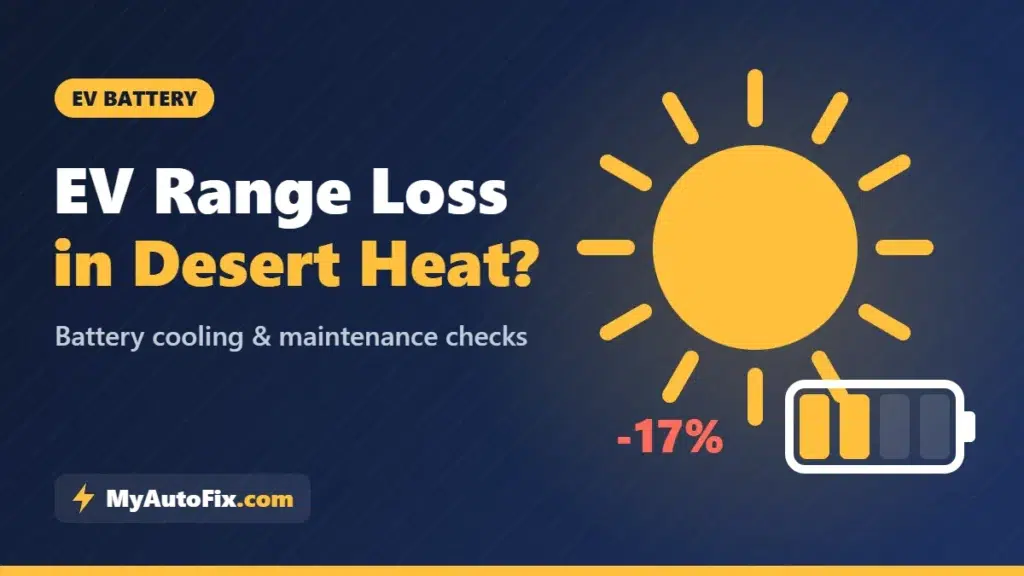
EV range loss is not just a winter problem. Cold weather gets most of the attention, but extreme heat costs EV range too. The A/C works hard, the battery has to be actively cooled while driving, charging and even parked, and high speeds on hot highways add drag. AAA testing found that at 95°F with the A/C on, range fell by about 17% on average. Here's where the energy goes and how to keep more of it. For official background, see FuelEconomy.gov's overview of electric vehicles.
Key takeaways
- In AAA testing, running the A/C at 95°F cut range by about 17% on average.
- The battery is actively cooled in heat, which uses energy while driving, charging and sometimes parked.
- Shade, preconditioning while plugged in and moderate highway speeds recover much of the loss.
- Heat also ages batteries faster, so avoid sitting at a high state of charge in the sun.
Where EV Range Loss Comes From in Hot Weather
| Energy use | Why it grows in heat | How to reduce it |
|---|---|---|
| Cabin A/C | Cooling a sun-baked cabin takes a lot of power at first | Precondition while plugged in; use shades |
| Battery cooling | The pack is chilled during hard driving and fast charging | Avoid the hottest part of the day for long trips |
| Parked climate features | Cabin overheat protection and camera modes run in the sun | Park in shade; adjust overheat settings |
| Highway speed | Aerodynamic drag rises steeply with speed | Drive a little slower on long hot runs |
| Tires | Pressure rises with heat; correct pressure keeps rolling resistance down | Set pressure cold, in the morning |
Heat and Battery Health
High temperatures speed up the chemical aging of lithium-ion cells, especially when the battery sits at a high state of charge. EVs with liquid thermal management protect the pack, but that protection uses energy. To help the battery in long hot summers:
- Keep the daily charge limit moderate unless your manual recommends otherwise for your chemistry.
- Charge to 100% only shortly before a long trip.
- Park in shade or a garage whenever possible, and leave the car plugged in during heat waves so cooling can use wall power.
- Expect slower fast charging when the pack is heat-soaked. See why EV charging is slower than usual.
Summer Maintenance Checks
- Check the coolant and look for leaks. If your car has an accessible reservoir, check the level, and watch for drips.
- Clean the front radiator area. Bugs and debris reduce cooling performance.
- Replace the cabin air filter. Restricted airflow makes the A/C work harder.
- Check tire pressure cold. Set it in the morning to the door placard; hot tires read higher.
- Review parked climate settings. Cabin overheat protection and security modes can use several percent a day. See EV battery drain when parked.
- Watch for warnings. Reduced power or battery temperature alerts in heat can point to a cooling fault. See battery cooling problems.
Road-Trip Tips for Desert Heat
- Precondition the cabin while still plugged in before setting off.
- Plan charging stops with a buffer; heat-soaked batteries may charge more slowly.
- Use the car's navigation to the charger so it can manage battery temperature.
- Drive a little slower on long, hot, uphill stretches.
- Carry water and keep enough charge to run the A/C if you're delayed.
More EV Guides
EV Heat Pump Not Working in Winter? 5 Signs, Causes and Repairs
EV heat pump not working in winter? Weak heat, cold air or big range loss: how heat pumps work, what's normal in…
Read guide →
EV Suspension Clunking Over Bumps: Common Causes and Parts to Check
EV suspension clunking over bumps? Learn which parts usually cause it, from sway-bar links to control-arm bushings, and how to diagnose it…
Read guide →
Electric Car Clicking Noise When Accelerating: CV Joint, Axle or Motor?
Electric car clicking noise when accelerating? CV joints, axle nuts, wheels, brakes or drive-unit mounts are the usual causes. Here is how…
Read guide →Frequently Asked Questions
How much range do EVs lose in hot weather?
In AAA testing at 95°F with the A/C running, range dropped by about 17% on average. Actual losses depend on the car, speed, sun and how long the car is parked in the heat.
Is heat bad for EV batteries?
Prolonged high temperatures, especially at a high state of charge, speed up battery aging. Thermal management, shade and moderate charge limits help.
Should I leave my EV plugged in during a heat wave?
Usually, yes. Plugged in, the car can use wall power to cool the battery and cabin instead of draining the pack.
Why does my EV charge slower in summer?
A heat-soaked battery may need cooling before it can accept high power, and some stations derate in extreme heat.
Does cabin overheat protection drain the battery?
It can use noticeable energy in hot sun. Using the fan-only setting or parking in shade reduces it.
The Bottom Line
Heat costs range mainly through A/C, battery cooling and parked climate features. Shade, preconditioning while plugged in, sensible charge limits and moderate speeds recover much of the loss and protect the battery's long-term health. Watch for cooling warnings and slow charging, which can point to a thermal-system issue.
Related guides
Mozammel writes maintenance guides and product research for My Auto Fix, focusing on tires, charging and everyday EV and car care. About our editorial process.