
EV Problems & Fixes
EV Charge Port Frozen? How to Free the Door, Latch and Cable Safely
Freezing rain and wet snow can lock an electric car’s charge port in three ways: the port door freezes shut, the locking pin that holds the connector freezes in place, or ice forms inside the connector so it won’t latch or release. It’s a common winter headache for EV owners, especially if you charge outdoors. The fix is almost always heat, not force. This guide explains how to use preconditioning and the charge port heater found on many EVs, how to use manual releases safely, and what to do when a frozen cable is stuck in the car.
Quick answer
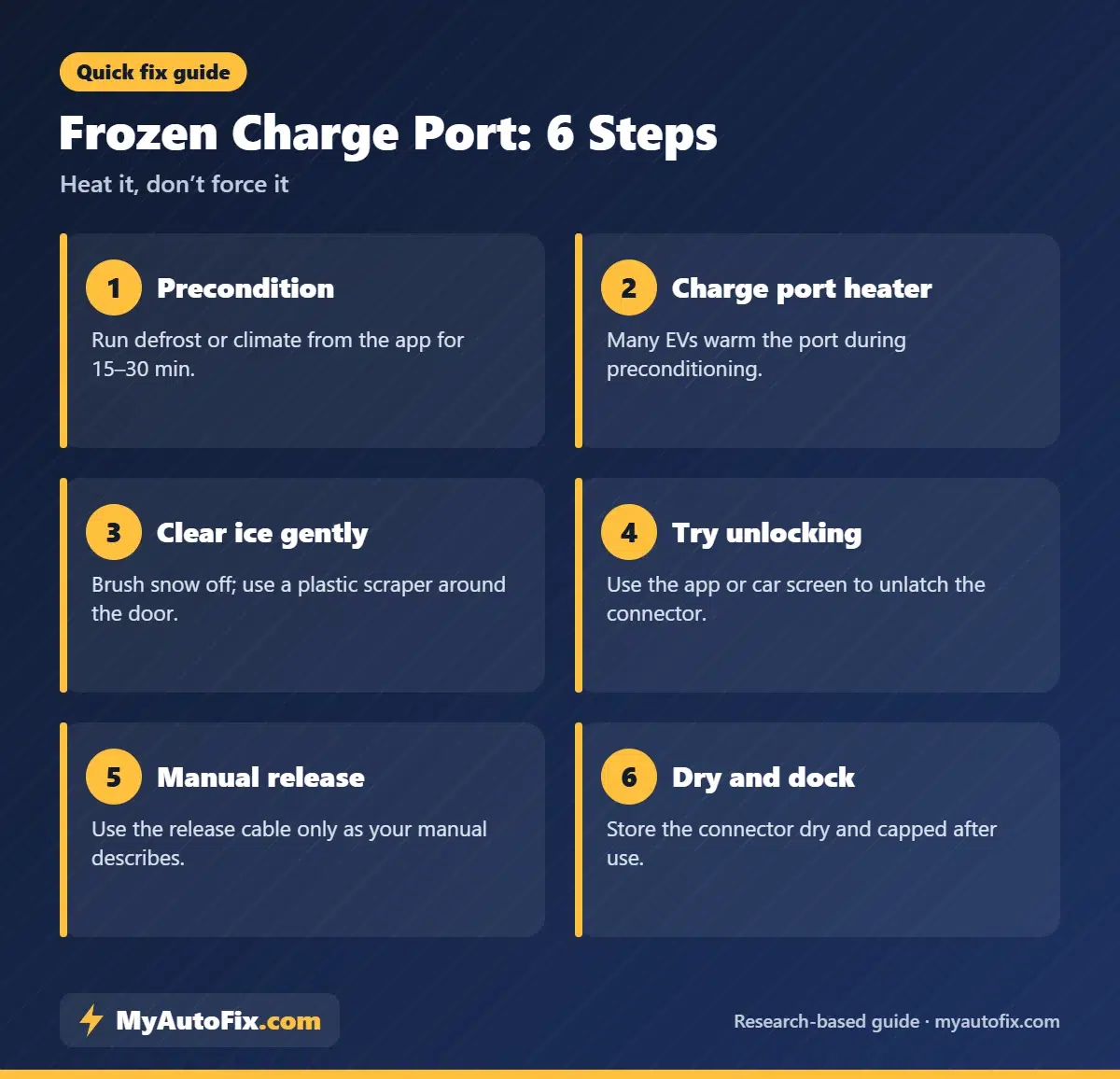
- Precondition or defrost from the app for 15–30 minutes; many EVs heat the charge port.
- Never pry the port door or yank a frozen cable; it damages pins and latches.
- Most EVs have a manual charge cable release; check your manual before you need it.
- Prevent ice by keeping the cable docked and dry and the port door closed.
In this guide
For more official guidance, see the U.S. Department of Energy’s guide to charging at home.
What Exactly Freezes?
| Problem | What you see | Typical fix |
|---|---|---|
| Port door frozen shut | Door won’t pop open | Preconditioning; clear ice; gentle press around the door |
| Locking pin frozen | Connector won’t release after charging | Preconditioning; unlock in app; manual release |
| Ice in the connector | Connector won’t latch or charging won’t start | Warm and dry the connector indoors |
| Cable stiff and frozen to ground | Hard to handle, risk of cracking | Warm it up before bending |
Step 1: Use Preconditioning and the Charge Port Heater
Most EVs let you warm the cabin and battery from the app. On many models, including Teslas, preconditioning or a defrost mode also warms the charge port area, and some have a dedicated charge port heater that activates when the car detects ice. Start climate or defrost from the app and wait 15–30 minutes. If the car is plugged in, it uses grid power, so you don’t lose range.
Once the port warms, try unlocking or releasing the connector from the app or the car’s screen. Many EVs also unlock the connector when you press the button on the charging handle, but only if the car allows it.
Step 2: Clear Ice Around the Port Door
- Brush off snow. Use a soft brush or a gloved hand around the port area.
- Chip gently with plastic. Use the edge of a plastic ice scraper around the door gap, not on the door itself.
- Press around the door. A firm palm press around the door edge can crack ice so it opens.
- Use de-icer cautiously. A small amount of de-icer on the outside of the door gap can help. Don’t spray into the port or pins.
Never pour water or spray liquid into the charge port, and never use metal tools near the pins. Water inside the inlet can refreeze and cause charging faults.
Step 3: Use the Manual Release (If Needed)
If the connector is locked in and won’t release even after warming, many EVs have a manual release. On several Tesla models, it’s a small cable or loop inside the trunk near the charge port area; pulling it releases the locking pin. Other manufacturers place releases behind trim panels or under the hood. Your owner’s manual shows the exact location and procedure.
- Stop charging first. End the session in the app or on the car screen.
- Locate the release. Follow the manual; don’t pull random cables or trim.
- Pull gently and steadily. While someone holds the connector, pull the release as instructed.
- Remove the connector. It should slide out without force.
- Inspect. Check pins and latch for damage before charging again.
If you’re at a public charger and can’t release the cable, contact the charging network’s support line; many can unlock the station remotely. Our guide to a charging cable stuck in the port covers more release scenarios.
Charging Won’t Start in the Cold?
Ice in the connector or port can stop the connector latching fully, so the car won’t begin charging. Bring a home charger’s connector inside to warm and dry (never apply direct high heat), and warm the car’s port with preconditioning. At public stations, try another connector. A very cold battery can also accept power slowly at first; charging rates increase as it warms. See why your EV is charging slowly and EV not charging at a public station for more troubleshooting.
How to Prevent a Frozen Charge Port
- Keep the connector docked in a holster with its cap on so it stays dry.
- Close the port door as soon as you unplug.
- Schedule departure or preconditioning on freezing-rain nights so the port warms before you leave.
- Park nose-in or out so the port faces away from wind-driven freezing rain, if possible.
- Use a car cover with a port flap on ice-storm nights.
- Store the cable off the ground so it doesn’t freeze into puddles.
When to Get Help
If the port door hinge or latch breaks, the connector pins look bent or burnt, or the car reports a charge port fault after thawing, contact your manufacturer’s service. Don’t keep forcing a charger into a damaged port.
The Bottom Line
An EV charge port frozen shut is a winter nuisance, not a disaster. Warm it with preconditioning, clear ice gently, use the app to unlock and keep the manual release as a last resort. With the connector docked and dry, an EV charge port frozen in place should become a rare event.
Frequently Asked Questions
How do I unfreeze my EV charge port?
Precondition or defrost from the app for 15–30 minutes; many EVs heat the charge port. Then unlock the connector from the app or screen.
Can I pour warm water on a frozen charge port?
No. Water can get into the port and pins, refreeze and cause faults. Use preconditioning and gentle ice removal.
Do Teslas have a charge port heater?
Many Tesla models include a charge port heater that activates during preconditioning or when ice is detected.
What if my charging cable is stuck at a public charger?
End the session, warm the car, try unlocking in the app, then call the network’s support line. Use the manual release as a last resort.
How do I stop my charge port freezing?
Keep the connector capped and docked, close the port door, precondition before leaving and use a cover in ice storms.
More EV Guides

7 Best Winter Tires for Tesla Model Y (2026): Snow, Ice and Range Compared
The best winter tires for Tesla Model Y in 255/45R19 and 255/40R20: Michelin X-Ice Snow, Blizzak 6, Nokian R5 EV and more,…

5 Best Snow Chains for Tesla Model Y (2026): Approved Fits, Snow Socks & Rules
The best snow chains for Tesla Model Y: Tesla-approved König XG-12 Pro, snow socks and budget cable chains, plus wheel-size rules, rear-only…
7 Best Outdoor Level 2 EV Chargers of 2026 (Weatherproof Picks)
The best outdoor Level 2 EV chargers for driveways and carports: Grizzl-E, ChargePoint, Autel and EVIQO compared by amps, weather rating and…