
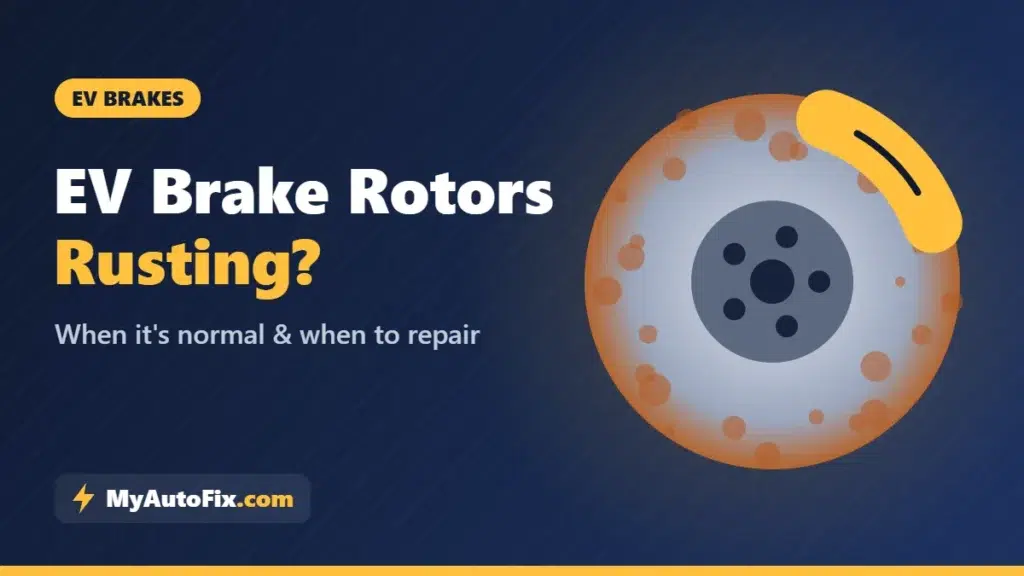
EV Brakes · Maintenance Guide
EV Brake Rotors Rusting Despite Regenerative Braking: When Is Repair Needed?
By Mozammel HussainUpdated October 20, 20269 min read
As an Amazon Associate I earn from qualifying purchases. We may earn a commission if you buy through links on this page, at no extra cost to you. Learn more.
EV brake rotor rust is common, and usually harmless. Regenerative braking means an EV's friction brakes do far less work than a gas car's. That's great for pad life, but the brakes can rust, glaze and seize from lack of use. Light surface rust after rain is normal; heavy rust bands, pitting and noisy, uneven braking are not. Here's how to tell the difference and keep EV brakes healthy. For official background, see FuelEconomy.gov's vehicle maintenance tips.
Key takeaways
- Flash rust after rain or washing is normal and wipes off with a few firm stops.
- Because the brakes are used less, caliper slides seize and rotors pit, especially in salted-road climates.
- Tesla, for example, recommends cleaning and lubricating calipers every year or 12,500 miles where roads are salted.
- Grinding, vibration, pulling or a rust band on the pad contact area means it's time for an inspection.
Why EV Brake Rotor Rust Happens
Every time a conventional car brakes, the pads scrub the rotor clean. In an EV, regenerative braking slows the car for most stops, so the pads may barely touch the rotors for weeks. Moisture, road salt and brake dust then sit on the iron surface. The result is surface rust, uneven deposits, pitting and sticky caliper hardware. Some EVs use rear drum brakes for exactly this reason, the Volkswagen ID.4 for example, and some models automatically apply the friction brakes from time to time to keep them clean.
Normal Rust vs a Real Problem
| What you see or hear | Normal? | What it means |
|---|---|---|
| Orange film after rain that clears after a few stops | Yes | Flash rust; harmless |
| Rust ring at the edge of the rotor outside the pad area | Usually | Unswept area; monitor it |
| Rust band or patches across the pad contact surface | No | Pads aren't cleaning the rotor; risk of pitting and vibration |
| Pitted, rough or grooved rotor face | No | Rotors need resurfacing or replacing |
| Grinding or scraping noise | No | Rust build-up, debris or worn pads; inspect soon |
| Car pulls when braking, or one wheel hotter | No | Seized caliper or slide pins |
| Pulsing brake pedal | No | Uneven deposits or thickness variation on the rotor |
How to Keep EV Brakes Healthy
- Use the friction brakes occasionally. Every week or two, make a few firm (not emergency) stops from moderate speed on a safe, empty road. This scrubs the rotors clean.
- Wash the wheels in winter. Rinse road salt from the wheels and brakes, then drive briefly and brake to dry them.
- Service the calipers annually in salt areas. Clean and lubricate the slide pins and pad contact points. Tesla, for example, recommends doing this every year or 12,500 miles where roads are salted.
- Check the pads during tire rotations. Measure pad thickness and look for uneven inner and outer wear, a sign of a sticking caliper.
- Change the brake fluid on schedule. Brake fluid absorbs moisture whether you brake hard or not; follow your manual's interval.
New to brake parts? Our brake system guide explains each component and its warning signs.
When Rotors or Pads Need Replacing
- Rotors: replace or resurface if they're pitted across the pad area, below the minimum thickness stamped on the rotor, or causing pedal pulsation that firm braking doesn't clear.
- Pads: replace if they're near the wear limit, glazed, cracked, or worn unevenly because of a seized caliper. On EVs, pads often fail from corrosion before they wear out.
- Calipers: if a piston or slide pin is seized and cleaning doesn't free it, the caliper or hardware needs replacing.
Tools for DIY EV Brake Checks
These tools cover inspection and basic caliper cleaning on most EVs.
- Measure pad thicknessLisle 81850 Brake Lining Thickness Gauge SetColor-coded feeler gauges to check pad thickness through the wheel or caliper.Check Price
- Clean calipers and hardwareCRC Brakleen Non-Chlorinated Brake Parts CleanerRemoves dust, grease and residue from calipers and hardware before re-lubricating slide pins.Check Price
- Torque wheels correctlyEPAuto 1/2-inch Drive Click Torque Wrench (10–150 ft-lb)Click-type wrench that covers common lug-nut torque specs for cars and light trucks.Check Price
- Support the car safelyAmazon Basics 3-Ton Jack Stands (pair)Ratcheting steel stands; never work under a car supported only by a jack.Check Price
More EV Guides
EV Heat Pump Not Working in Winter? 5 Signs, Causes and Repairs
EV heat pump not working in winter? Weak heat, cold air or big range loss: how heat pumps work, what's normal in…
Read guide →
EV Suspension Clunking Over Bumps: Common Causes and Parts to Check
EV suspension clunking over bumps? Learn which parts usually cause it, from sway-bar links to control-arm bushings, and how to diagnose it…
Read guide →
Electric Car Clicking Noise When Accelerating: CV Joint, Axle or Motor?
Electric car clicking noise when accelerating? CV joints, axle nuts, wheels, brakes or drive-unit mounts are the usual causes. Here is how…
Read guide →Frequently Asked Questions
Why are my EV's brake rotors rusty?
Regenerative braking does most of the stopping, so the pads rarely scrub the rotors clean. Moisture and road salt then cause rust, especially on cars driven gently or parked outside.
Is rust on EV brake rotors dangerous?
Light flash rust isn't. Heavy rust across the pad contact area, pitting, grinding or pulling while braking reduces performance and should be inspected.
How do I clean rust off EV brake rotors?
Make several firm stops from moderate speed on a safe, empty road. If rust remains on the pad contact area after that, the rotors may need resurfacing or replacing.
How often should EV brakes be serviced?
Follow your manual. In salted-road regions, manufacturers such as Tesla recommend cleaning and lubricating the calipers every year or 12,500 miles.
Do EVs still need brake fluid changes?
Yes. Brake fluid absorbs moisture over time regardless of how often you brake, so follow the inspection or replacement interval in your manual.
The Bottom Line
Light rust is part of owning an EV. Heavy rust bands, pitting and seized calipers are the real risk, and they come from the brakes being used too little. Brake firmly now and then, rinse off winter salt and service the calipers every year in salty climates. Have rotors, pads and calipers checked if you notice grinding, pulling or pulsation.
Related guides
Mozammel writes maintenance guides and product research for My Auto Fix, focusing on tires, charging and everyday EV and car care. About our editorial process.