

Tires & Wheels · Winter Guide
How to Choose Reliable Tires for Snowy and Icy Conditions
By Mozammel HussainUpdated October 13, 20269 min read
As an Amazon Associate I earn from qualifying purchases. We may earn a commission if you buy through links on this page, at no extra cost to you. Learn more.
Your tires decide how well your car stops and steers on snow and ice, far more than all-wheel drive does. AWD helps you get moving, but it doesn't help you stop or turn. This guide explains what makes a tire reliable in winter, how to read the markings, and how to set up your car for the conditions where you live.
Key takeaways
- Dedicated winter tires offer the best grip on ice and packed snow.
- Look for the three-peak mountain snowflake (3PMSF) symbol, not just "M+S".
- Fit winter tires on all four wheels, never just two.
- Check pressure often in winter; it drops about 1 psi for every 10°F.
What Makes a Tire Good in Snow and Ice
- Cold-flexible rubber: winter compounds stay soft below freezing, so the tread can grip the road instead of skating over it.
- Dense siping: thousands of small slits add biting edges for ice.
- Deep, open grooves: they pack with snow (snow grips snow) and evacuate slush to resist hydroplaning.
- Studs (optional): metal studs improve grip on glare ice but are restricted or banned in some states and seasons.
Your Winter Tire Options
| Option | Ice & packed snow | Best for |
|---|---|---|
| Studless winter tires | Excellent | Regular snow, ice and freezing temperatures |
| Studded winter tires | Best on glare ice | Very icy regions where studs are legal |
| All-weather tires (3PMSF) | Good | Moderate winters, drivers who want one set year-round |
| All-season tires | Fair to poor | Mild winters with occasional light snow |
| All-season + chains/socks | Good in deep snow, temporary | Rare snow days, mountain passes |
M+S vs. Three-Peak Mountain Snowflake
"M+S" (mud and snow) only describes the tread geometry and is found on many all-season tires. The 3PMSF symbol means the tire passed a standardized snow traction test. For reliable winter performance, choose a tire with 3PMSF.
Winter Tire Tips
- Fit four, not two. Mixing winter and all-season tires front and rear can make the car spin or slide unpredictably.
- Fit them early. Switch when temperatures regularly fall below about 45°F (7°C), not after the first storm.
- Check tread depth. Winter tires lose much of their snow grip as they wear; many experts suggest replacing them at about 5/32 to 6/32 inch.
- Watch the pressure. Cold air lowers pressure. Check monthly and inflate to the door-jamb spec with the tires cold.
- Store the off-season set properly. Clean, dry, out of sunlight and away from heaters or motors.
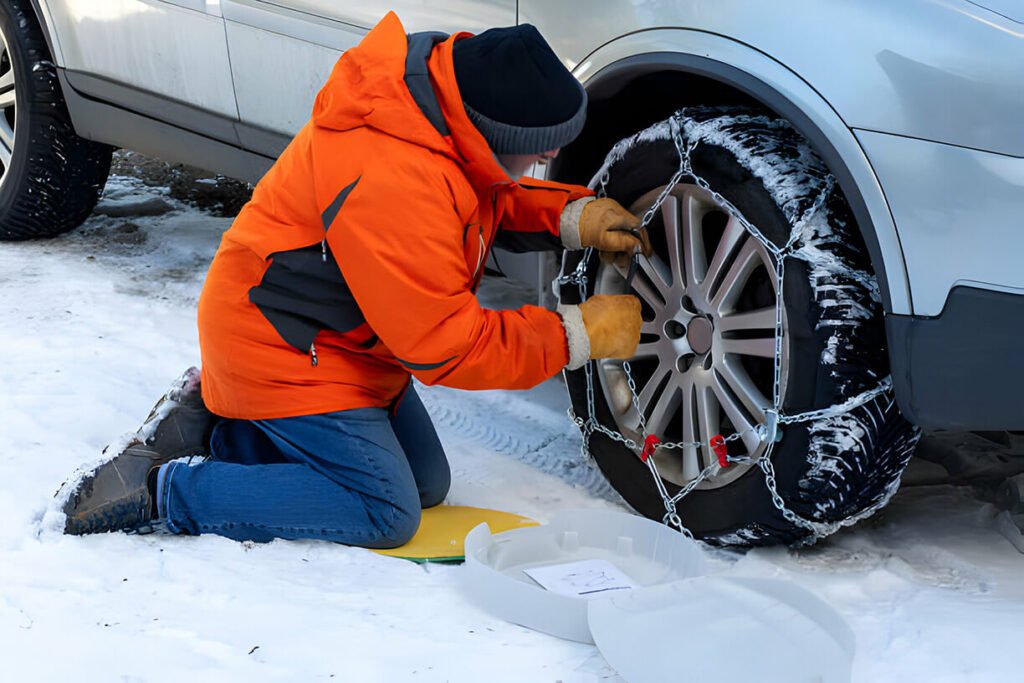
- Carry a backup. Keep chains or snow socks in the trunk for mountain passes or rare heavy snow, and practice fitting them at home.
Winter Driving Essentials
Check the size charts for your exact tire size, and local rules on chain and sock use.
- Cable chainsSCC Super Z6 Cable Tire ChainsLow-profile cable chains for cars with tight wheel-well clearance; check your size chart.Check Price
- Easy-fit textile socksAutoSock HP645 Textile Snow SocksTextile traction cover that's quick to fit for occasional snow; check local rules and your size.Check Price
- Cold-weather pressure checksAstroAI Digital Tire Pressure GaugeBacklit digital gauge reading up to 150 psi; easy to read in a dark garage.Check Price
- Measure winter treadGODESON Color-Coded Tread Depth Gauge (2-pack)Color bands show green, yellow and red tread depth at a glance, in 32nds of an inch.Check Price
Frequently Asked Questions
Do I need winter tires if I have AWD?
AWD helps you accelerate on slippery roads, but it doesn't improve braking or cornering grip. Winter tires do, so they're the bigger safety upgrade for snow and ice.
When should I put winter tires on?
When average temperatures regularly drop below about 45°F (7°C), usually before the first snowfall.
Can I put winter tires on just the front?
No. Fitting winter tires on only one axle creates an imbalance in grip that can cause the car to spin. Always fit four.
Are all-weather tires as good as winter tires?
All-weather tires with the 3PMSF symbol are a good compromise for moderate winters, but dedicated winter tires still perform better on ice and in very cold conditions.
The Bottom Line
For regular snow and ice, a set of four 3PMSF winter tires is the most reliable setup. For milder winters, all-weather tires or all-seasons with chains or snow socks as backup can work. Compare tire types in mud vs. snow tires and keep an eye on pressure with a tire pressure monitoring system.
Mozammel writes maintenance guides and product research for My Auto Fix, focusing on tires and DIY car and powersports care. About our editorial process.