

Tire Cupping Explained: Causes, Fixes, and Prevention Tips
If you’ve noticed strange dips, scoops, or scalloped patches on your tire tread, you’re likely dealing with tire cupping—also known as scalloped tires or cupped tire wear. This type of uneven tire wear doesn’t happen randomly; it’s often a red flag for underlying vehicle problems. Ignoring it can lead to a bumpy ride, increased road noise, reduced handling, longer stopping distances, and premature tire replacement.
In this guide from My Auto Fix, we’ll break down exactly what tire cupping is, the most common causes, how to fix it, and simple steps to prevent it from returning. Whether you’re driving a daily commuter, an off-road rig with mud tires, or even a golf cart with specialized low-speed tires, understanding cupping can save you money and keep you safe on the road.
What Is Tire Cupping?
Tire cupping is a specific pattern of uneven tire wear where sections of the tread wear down faster than others, creating cupped, dipped, or scalloped spots—often spaced every few inches around the tire circumference. Instead of smooth, even tread wear, the surface looks wavy or crater-like, resembling someone scooped out chunks with an ice cream scoop.
This irregular wear usually appears on the edges or across the tread and is different from other patterns like center wear (from overinflation) or edge wear (from underinflation). Cupped tires feel “bouncy” or produce a rhythmic humming, growling, or thumping noise at certain speeds, especially noticeable between 30-50 mph.
Early detection is key— regular visual inspections and tire rotations help catch it before it shortens tire lifespan dramatically.
Common Causes of Tire Cupping
Tire cupping rarely stems from the tires themselves. It’s typically a symptom of mechanical issues that cause inconsistent road contact, bouncing, or vibration. Here are the top culprits:
Worn Suspension Components
The most frequent cause is failing shocks, struts, bushings, or other suspension parts. When shocks can’t properly dampen road impacts, wheels bounce excessively, leading to uneven tread contact and cupped spots. This is especially common on vehicles with high mileage or those driven on rough roads.
Wheel Imbalance or Out-of-Balance Tires
Unbalanced wheels create vibrations that make tires “hop” slightly with each rotation, wearing down high spots faster and forming cups over time.
Misalignment Issues
Improper wheel alignment (toe, camber, or caster out of spec) forces tires to scrub sideways or unevenly against the pavement, accelerating irregular wear like cupping.
Infrequent Tire Rotations
Other Factors
- Incorrect tire pressure (chronic under- or over-inflation)
- Worn wheel bearings or bent rims
- Low-quality or mismatched tires
- In some cases, aggressive off-road use with mud tires (which have deeper, chunkier treads) or low-speed applications like golf cart tires can show cupping faster if suspension isn’t maintained, as vibrations amplify on uneven terrain.
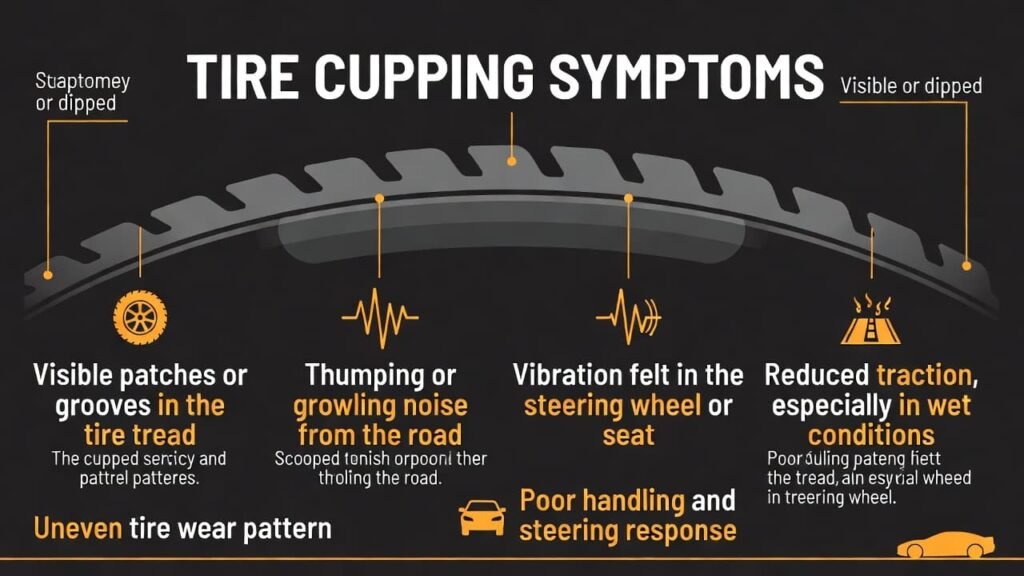
Symptoms of Tire Cupping
Spotting tire cupping early can prevent bigger issues:
- Visible scooped or dipped patches in the tread (often on edges)
- Thumping, humming, or growling road noise that changes with speed
- Vibration felt through the steering wheel or seat
- Reduced traction, especially in wet conditions
- Uneven handling or pulling to one side
Run your hand over the tread—if it feels wavy or bumpy instead of smooth, cupping is likely present.
How to Fix Tire Cupping
Once cupping starts, the tread won’t “heal” itself—even if you correct the root cause, existing damage remains. Here’s the step-by-step fix:
1. Diagnose the Root Cause
Have a professional inspect suspension, shocks/struts, alignment, and wheel balance. Many auto shops offer free or low-cost checks.
2. Address Underlying Issues
- Replace worn shocks, struts, bushings, or bearings
- Get a full wheel alignment
- Balance wheels (and re-balance if needed)
- Check and adjust tire pressure to manufacturer specs
3. Replace the Cupped Tires
Cupped tires are unsafe and should be replaced, even if tread depth looks okay elsewhere. Mismatched wear reduces grip and increases hydroplaning risk.
4. After Fixes
Rotate new tires immediately and follow a maintenance schedule to avoid recurrence.
Prevention Tips for Tire Cupping
Preventing tire cupping is far cheaper than fixing it. Follow these best practices:
- Rotate tires every 5,000–8,000 miles (or per your vehicle's manual)
- Balance wheels during every tire installation or rotation
- Get wheel alignment checked annually or after hitting potholes/curbs
- Inspect suspension components yearly, especially shocks/struts
- Maintain proper tire inflation—check monthly with a reliable gauge
- Avoid cheap, low-quality tires; invest in reputable brands suited to your driving (e.g., durable options for mud tires in off-road use)
- For golf cart tires or low-speed vehicles, ensure regular checks since vibrations can build quickly on uneven paths
- Drive smoothly—avoid excessive speeding over bumps or aggressive cornering
Consistent maintenance extends tire life by 20–30% and improves fuel efficiency, handling, and safety.
Tire cupping isn’t just cosmetic—it’s a warning sign of suspension, balance, or alignment problems that affect your vehicle’s performance and safety. By understanding the causes (like worn shocks or misalignment), spotting symptoms early, fixing issues promptly, and following a solid prevention routine, you can avoid noisy rides, poor handling, and unnecessary tire expenses.
At My Auto Fix, we’re here to help with all your tire and auto repair needs. Schedule a tire inspection today if you suspect cupping—catch it early and drive confidently. Safe travels!