

Tires & Wheels · DIY Guide
Tire Cupping Explained: Causes, Fixes and Prevention
By Mozammel HussainUpdated October 13, 20267 min read
As an Amazon Associate I earn from qualifying purchases. We may earn a commission if you buy through links on this page, at no extra cost to you. Learn more.
Cupping, also called scalloping, leaves dips around the edge of the tread that you can feel with your hand. It usually shows up as a rhythmic humming or wub-wub noise that changes with speed. Cupping is almost always a symptom of something else, so the real fix is finding and repairing the cause.
Key takeaways
- Cupping is most often caused by worn shocks or struts, out-of-balance wheels or poor alignment.
- Signs include a speed-related humming noise, vibration and patchy dips in the tread.
- Cupped tires can't be truly repaired; fix the cause first or new tires will cup too.
- Regular rotation, balancing and alignment checks prevent most cupping.
What Tire Cupping Looks and Sounds Like
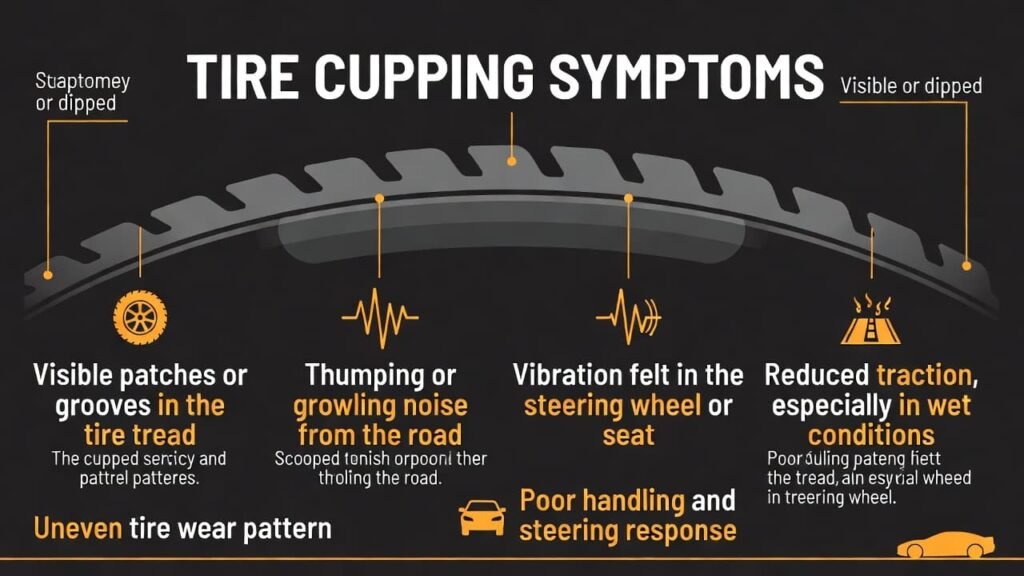
Look across the tread and you'll see alternating high and low spots, usually 2–4 inches long, around the outer edge. Run your hand around the tire and the dips are easy to feel. Inside the car you may hear a humming or rumbling that gets louder with speed and can sound like a bad wheel bearing, plus a vibration in the steering wheel or floor.
What Causes Tire Cupping
- Worn shocks or struts. The most common cause. When dampers wear out, the tire bounces slightly as it rolls, hitting the road harder in some spots than others.
- Wheels out of balance. An imbalanced wheel wobbles at speed, wearing the tread unevenly.
- Poor alignment. Incorrect toe or camber scrubs the tread unevenly.
- Worn suspension parts. Loose ball joints, tie rods or wheel bearings let the wheel move when it shouldn't.
- Infrequent rotation. Tires that stay in one position, especially the rear of front-wheel-drive cars, are more likely to cup.
- Wrong tire pressure. Under- or over-inflation makes the tread contact the road unevenly.
How to Check for Cupping at Home
- Inspect visually. Park on level ground, turn the steering to full lock and look across the front tread under good light.
- Feel the tread. Run your hand around the outer edge. Patchy dips and raised spots point to cupping.
- Measure depth. Use a tread depth gauge at several points around the tire. Big differences confirm uneven wear.
- Do a bounce test. Push down hard on each corner and let go. If the car keeps bouncing more than once or twice, the shocks or struts are likely worn.
- Note the noise. A hum that changes with speed but not when you turn suggests tire noise; one that changes when you turn may point to a wheel bearing.
Can Cupped Tires Be Fixed?
Not really. Mild cupping can sometimes be reduced by rotating the tire to a different position, and some shops offer tire truing, but the uneven wear can't be undone. What matters most is fixing the cause: replace worn shocks or struts, repair loose suspension parts, then balance and align the wheels. If you only replace the tires, the new set will usually cup too.
Replace the tire if the cupping is severe, the noise is unbearable, or any part of the tread is close to the legal minimum of 2/32 inch.
How to Prevent Tire Cupping
- Rotate tires at the interval in your owner's manual (often every 5,000–7,500 miles).
- Have the wheels balanced when you get new tires or notice vibration.
- Get an alignment after suspension work, new tires or a hard pothole hit.
- Replace shocks and struts when they wear out, not just when they leak.
- Check tire pressure monthly and before long trips.
Tools to Monitor Tire Wear
Catching uneven wear early is the cheapest way to prevent cupping.
- Spot uneven wearGODESON Color-Coded Tread Depth Gauge (2-pack)Color bands show green, yellow and red tread depth at a glance, in 32nds of an inch.Check Price
- Keep pressure rightAstroAI Digital Tire Pressure GaugeBacklit digital gauge reading up to 150 psi; easy to read in a dark garage.Check Price
- For safe rotationsEPAuto 1/2-inch Drive Click Torque Wrench (10–150 ft-lb)Tighten lug nuts to spec after rotating or changing a wheel.Check Price
Frequently Asked Questions
Is it safe to drive on cupped tires?
Mild cupping isn't an immediate danger, but it reduces grip and comfort and points to worn suspension parts that can affect braking and handling. Have the cause checked soon, and replace tires that are severely worn or close to 2/32 inch tread depth.
What does tire cupping sound like?
Cupped tires usually make a rhythmic humming, rumbling or wub-wub noise that gets louder and faster as you speed up. It's often mistaken for a bad wheel bearing.
Do bad shocks cause tire cupping?
Yes. Worn shocks and struts are the most common cause, because they let the tire bounce slightly as it rolls, wearing the tread in patches.
Will rotating tires fix cupping?
Rotation can reduce mild cupping over time and prevents it from getting worse, but it won't remove existing wear. Fix the underlying cause first.
The Bottom Line
Treat cupping as a warning light for your suspension. Check shocks, struts, balance and alignment, fix what's worn, and keep up with regular rotations. For related checks, see our DIY alignment checks and guide to tire rotation.
Related guides
Mozammel writes maintenance guides and product research for My Auto Fix, focusing on tires and DIY car and powersports care. About our editorial process.